
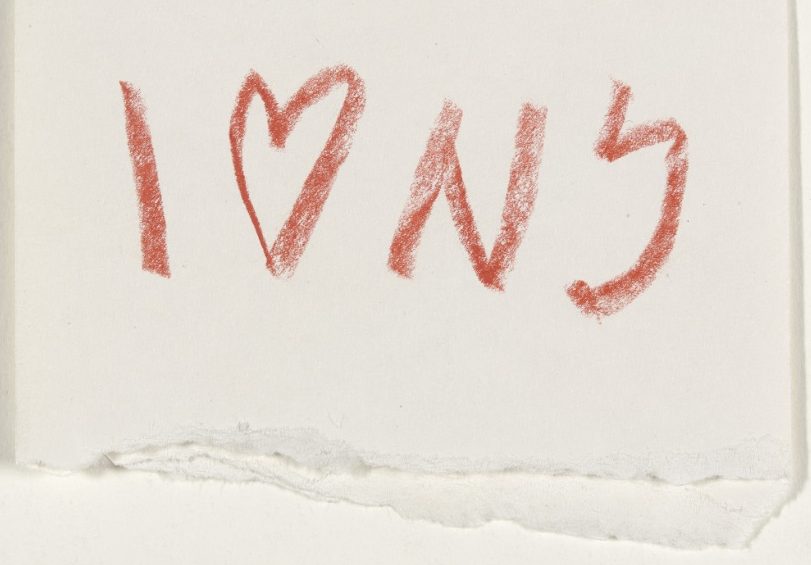
The year was 1976. New York City back then was a far cry from the glitz of today’s skyscrapers. It was a city of broken windows, the empty hollows of abandoned buildings, and a restless twilight. Crime was at an all-time high, the budget was depleted, and tourists avoided the “Big Apple” as if it were a plagued land. The city was slowly fading out.
Milton Glaser watched this decline with a profound, personal ache. A native New Yorker from the Bronx, these weren’t just headlines to him—these were the streets that had shaped him as an artist. He felt an almost physical responsibility to stop his home from crumbling into ruins.
In this atmosphere of despondency, William S. Doyle, the Deputy Commissioner of the New York State Department of Commerce, realized the city didn’t just need a new tax—it needed faith. He turned to the advertising agency Wells Rich Greene, but the heart of the campaign had to be a visual symbol. That’s how the task reached Glaser.
Milton expected many things, but he didn’t expect the answer to find him in the back of a yellow taxi amidst the city noise. He pulled a crumpled envelope from his pocket and, with a simple red crayon, sketched three letters and a heart.
Why is this story more than just a legend about a logo?
Virality turned Classic. Glaser created more than just an image; he created a “visual virus” of incredible power. His idea was adopted not only by other cities but by streets, squares, and thousands of brands worldwide. It is that rare case where design ceases to belong to the author and becomes part of the global cultural code.
Genius on a Scrap of Paper. The most monumental solutions often look deceptively simple. This is the essence of my approach: cutting through the noise to find that “million-dollar formula” that is understood without words in any language.
Personal Mission and the Time Paradox. Many ask why Glaser did this work for free. The answer is simple: for a kid from the Bronx, it was impossible to invoice his own home in a moment of catastrophe. Design, for him, was always a tool for social change. But there was a funny twist: both Milton and Commissioner Doyle were convinced the campaign was a temporary measure that would last a couple of months at most. They weren’t planning for eternity—they just wanted to save what they loved, right here and now. Glaser handed over the rights to the state, never suspecting his minute-long sketch would become an immortal symbol, bringing the city millions half a century later.
New York survived not because of advertising, but because of the emotion Glaser packed into four symbols. When we work on your brand or interior, we look for that same spark—concise, powerful, and enduring. Even if you think the project is “temporary,” I design it as if it were for the ages.